Counter-Terrorism Awareness and Response Operations
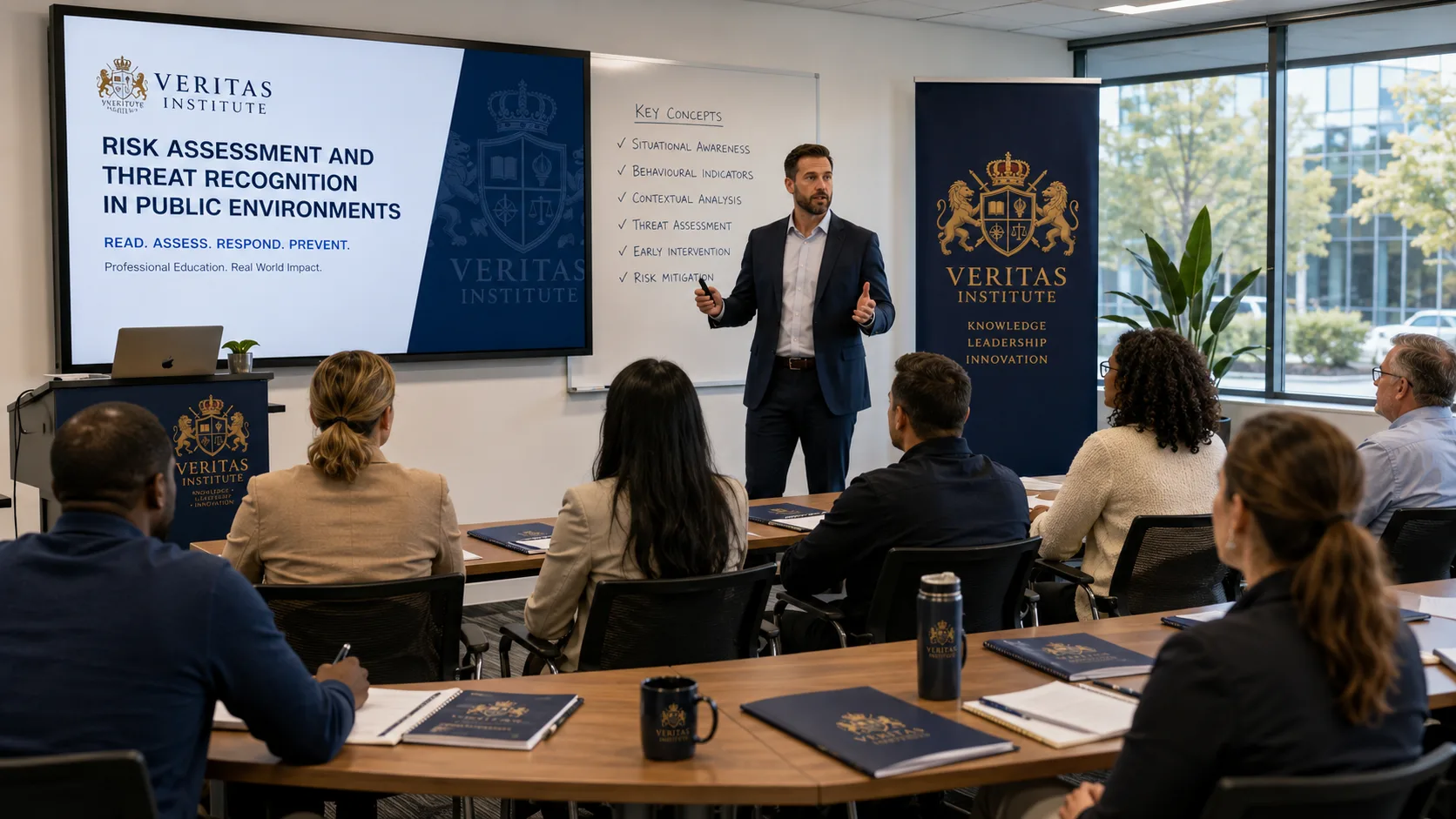
Course Overview
The global threat landscape has changed. Terrorism is no longer confined to conflict zones or distant regions; it is a fluid, adaptive, and borderless challenge that impacts corporations, governments, critical infrastructure, and public spaces worldwide. Security professionals today must be more than observers. They must be informed, prepared, and capable of recognizing, disrupting, and responding to threats long before they materialize.
The Counter-Terrorism Awareness and Response Operations program is a comprehensive, research-driven, 10-module certification designed for frontline officers, supervisors, managers, and executive-level security leaders who require a deep, globally relevant understanding of modern terrorism. Developed using insights from the United Nations Office of Counter-Terrorism, INTERPOL, EUROPOL, the FBI, MI5, the RCMP, NATO COE-DAT, and leading academic institutions, this course delivers a level of depth and operational relevance rarely found in commercial training programs.
It is built for the global security industry—not one region, not one threat profile, but the full spectrum of modern extremist violence.
Who This Course Is For
This course is designed for security professionals at the mid-management level who require a globally informed, operationally grounded understanding of counter-terrorism. It is ideal for supervisors, corporate security managers, emergency response personnel, law enforcement partners, risk managers, intelligence analysts, and executive-level leaders responsible for organizational safety. Whether you operate in hospitality, retail, critical infrastructure, transportation, corporate environments, or government facilities, this program equips you with the knowledge and confidence to perform at a higher standard.
Learner Outcomes
Participants develop a deep understanding of how terrorism functions as a system—how attackers think, plan, prepare, and execute. They learn to identify early indicators of radicalization and pre-attack behaviour. They gain the ability to interpret hostile reconnaissance, recognize vulnerabilities in physical environments, and understand how to integrate into multi-agency command structures during crisis events. They acquire the knowledge needed to support emergency medical response, manage mass-casualty environments, and contribute to organizational resilience after an incident. Most importantly, they learn how to apply global best practices in any operational context, from corporate security to public venues, transportation hubs, government facilities, and private-sector environments.