Security Supervision and Operational Management Foundations
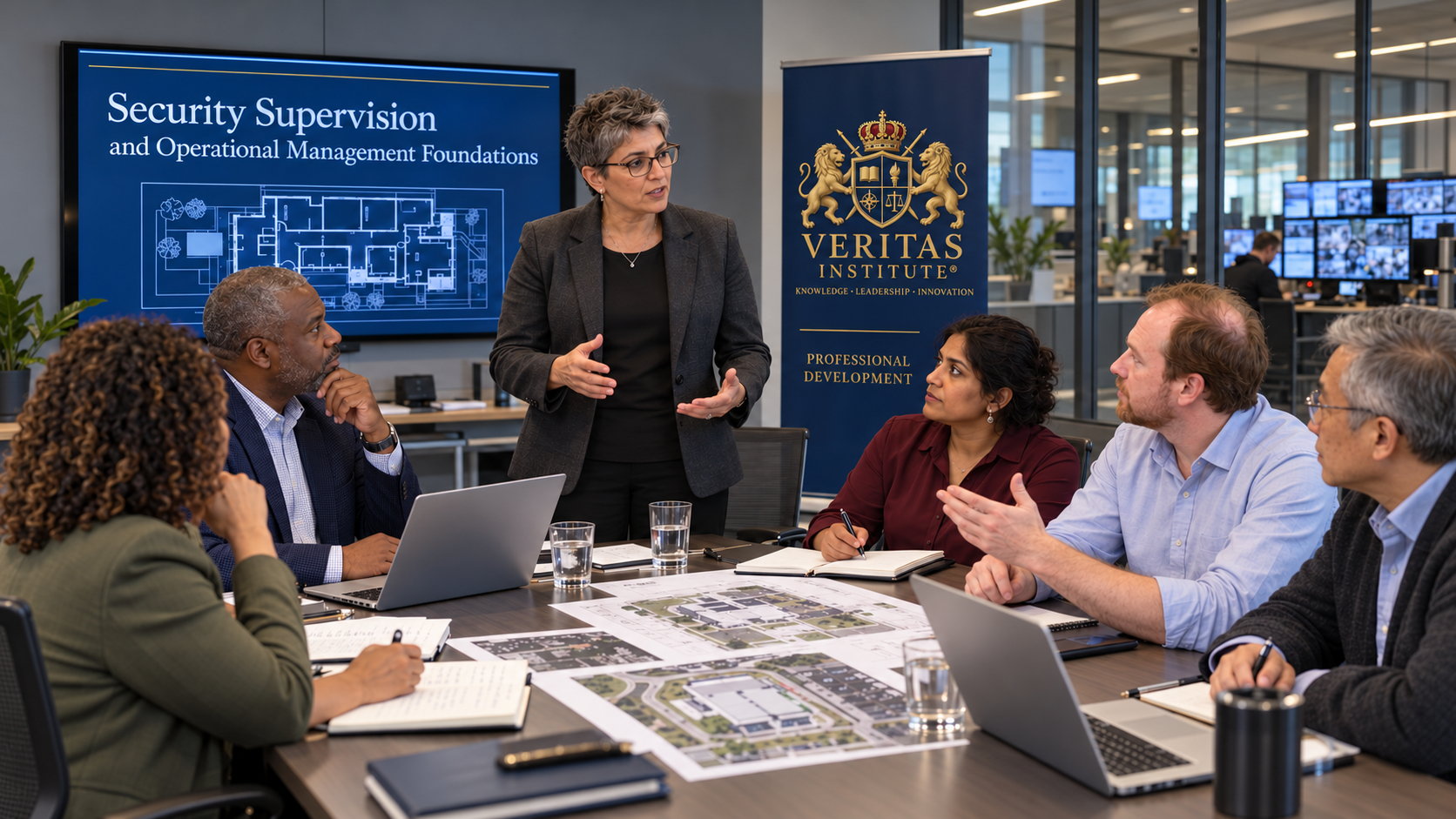
Security Supervision and Operational Management Foundations
A Global, Executive‑Level LMS Course for Modern Security Professionals
Course Overview
Security supervision and operational management require far more than compliance with routine post orders. This advanced, self-paced course develops the judgment, operational discipline and organizational awareness required of security managers and directors. It examines supervision, operational risk, investigations, incident command, international operations, integrated technology, workforce leadership, strategy, governance, evaluation, partnerships and executive influence. It treats security as a professional management function that protects people, supports lawful operations and helps organizations remain resilient under uncertainty.
Across twelve substantive modules, learners progress from the foundations of operational supervision and risk management to more advanced responsibilities in investigations, emergency leadership, cross-border operations, technology oversight, workforce management, strategy, governance, program assurance, collaboration and executive decision-making. Narrative instruction is supported by realistic international scenarios and references to relevant professional guidance. Case scenarios identified as fictional are designed to build applied judgment rather than to represent actual historical incidents.
The course prepares experienced practitioners to convert security knowledge into defensible management decisions. Participants examine how to define authority, allocate resources, supervise people, manage technology, evaluate competing risks, protect rights and explain recommendations to senior decision-makers. Global examples highlight the importance of local law, culture, infrastructure and public-authority responsibilities. The emphasis remains on practical leadership, evidence-informed analysis and professional accountability.
Who Is This For
This course is designed for experienced supervisors, managers, directors and aspiring security executives who lead teams, control operations, oversee suppliers, participate in governance or advise organizational decision-makers. It is equally relevant to security professionals in corporate, educational, healthcare, critical infrastructure, transport and other complex operating settings.
-
Security Managers and Directors responsible for emergency response, incident management, or operational leadership.
-
Corporate Security Leaders working within multinational organizations, global supply chains, or high‑risk environments.
-
Public‑Private Security Coordinators who collaborate with law enforcement, emergency services, regulatory bodies, and community stakeholders.
-
Risk, Resilience, and Business Continuity Professionals seeking a deeper integration of security leadership into enterprise‑level crisis management.
-
Security Supervisors transitioning into strategic or executive roles and requiring a more advanced, global perspective.
-
Professionals in critical infrastructure, transportation, energy, healthcare, finance, and technology sectors where emergency management is mission‑critical.
This course assumes foundational security knowledge and is designed to elevate experienced practitioners into strategic, globally competent leaders.
Learner Outcomes
Upon completing the course, learners should be able to demonstrate developed managerial judgment across the core responsibilities of security supervision and operational management, including the following outcomes:
-
Lead security teams and manage complex operations through clear authority, professional judgment and responsible escalation.
-
Design effective security operating arrangements and incident-management processes that reflect risk, legal requirements and cross-border realities.
-
Evaluate physical, digital and cyber-physical controls, recognizing operational dependencies and the limits of emerging technologies.
-
Work effectively with law enforcement, emergency services, regulators, service providers and community stakeholders within appropriate authority boundaries.
-
Conduct defensible operational investigations, preserve evidence, evaluate competing explanations and communicate substantiated findings.
-
Develop capable, ethical and reliable security teams using sound staffing, coaching, fair performance management and workforce wellbeing principles.
-
Evaluate security programme effectiveness through valid indicators, risk-based assurance, exercises and verified corrective actions.
-
Produce credible business cases, advise executives and participate in governance while respecting risk ownership and legal obligations.
-
Anticipate emerging geopolitical, environmental, workforce and technological risks and improve organizational readiness for change.
By the end of the course, learners will not only understand emergency and incident management—they will be able to lead it at the highest professional level.