Security Technology Integration and Operations Oversight
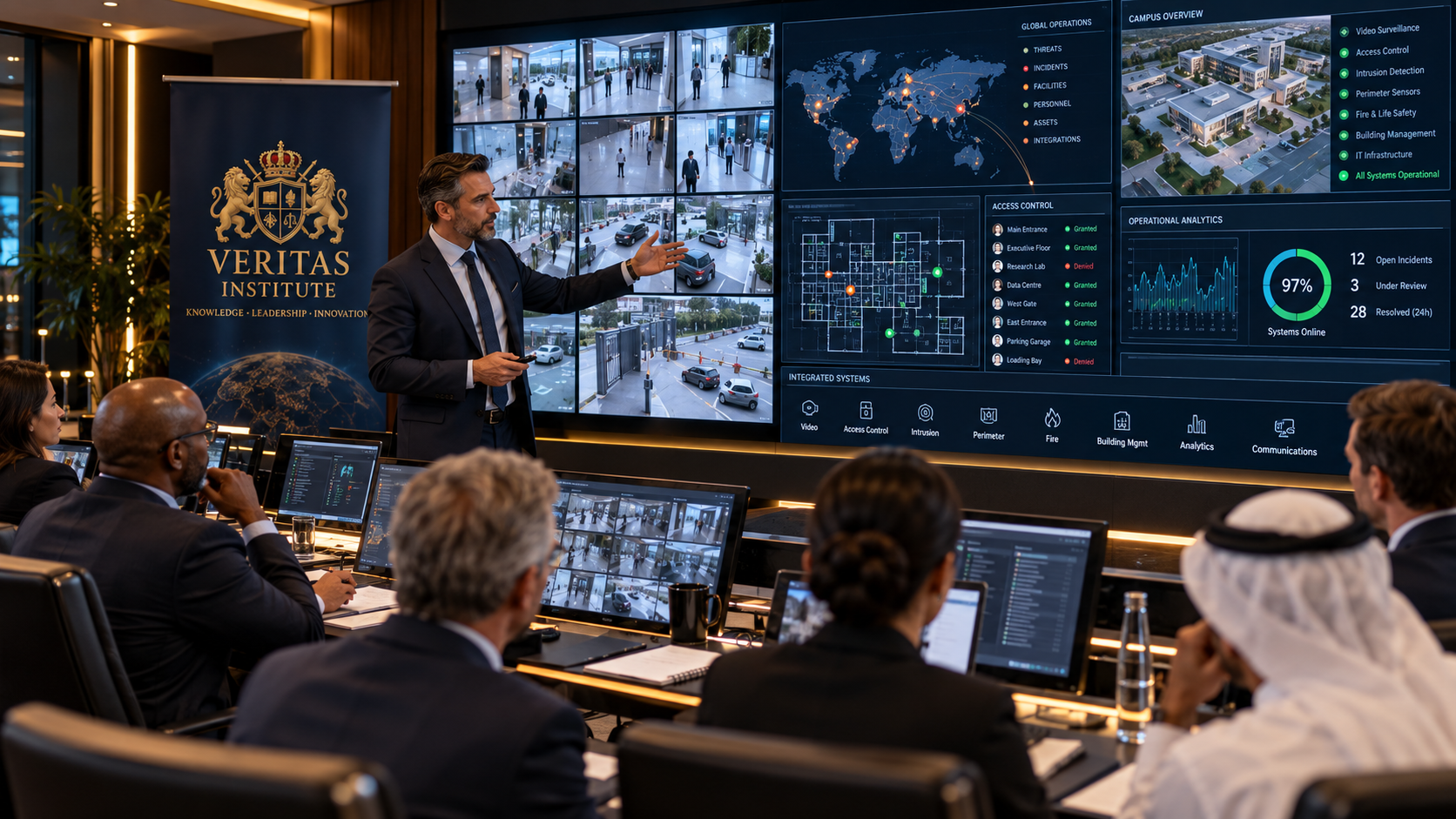
Course Overview
Security operations have evolved into complex, technology‑enabled ecosystems where physical infrastructure, digital systems, and human decision‑making intersect. This course provides a comprehensive, modern framework for understanding and managing integrated security technologies across surveillance, access control, command centres, cyber‑physical systems, incident response, and governance. Learners are guided through the operational realities of today’s environments, exploring how technology enhances situational awareness, strengthens identity management, supports investigations, and enables real‑time decision‑making. The course blends executive‑level strategic insight with practical operational depth, ensuring participants gain both conceptual understanding and applied competence. By the end, learners will be equipped to oversee technology‑enabled security operations with confidence, clarity, and professional rigor.
Who Is This For
This course is designed for security leaders, supervisors, analysts, and emerging professionals who oversee or interact with modern security technology platforms. It is equally valuable for individuals transitioning from traditional physical security roles into integrated, technology‑driven environments. Corporate security managers, command centre operators, emergency response coordinators, IT‑security liaisons, and professionals responsible for governance, compliance, or risk management will benefit from the course’s depth and structure. It is also suitable for organizations seeking to elevate their teams’ capabilities, ensuring personnel understand not only how systems function but how they support strategic objectives, operational resilience, and organizational safety.
Learners Outcome
Learners will complete this course with a strong, practical command of integrated security technology operations. They will understand how surveillance, access control, sensors, analytics, and command centres work together to create unified situational awareness. They will be able to interpret alerts, manage incidents, support investigations, and apply structured decision‑making under pressure. Graduates will demonstrate competency in cyber‑physical risk management, technology governance, vendor oversight, and lifecycle planning. They will be prepared to lead technology‑enabled teams, implement responsible surveillance practices, and contribute to organizational resilience through informed, strategic, and operationally sound security management. The course equips learners with the confidence and capability to operate in modern environments where technology is central to safety, continuity, and response.