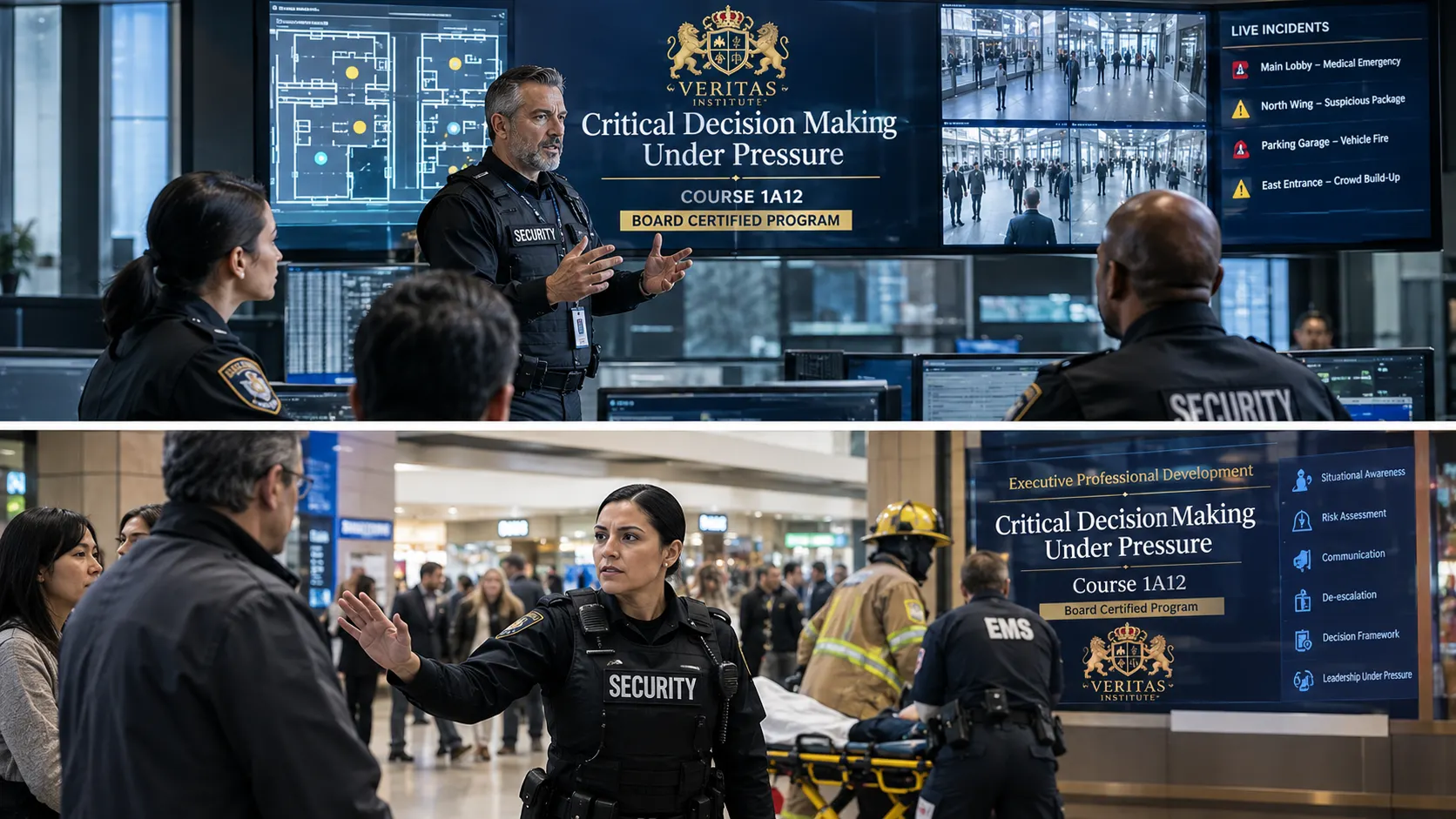
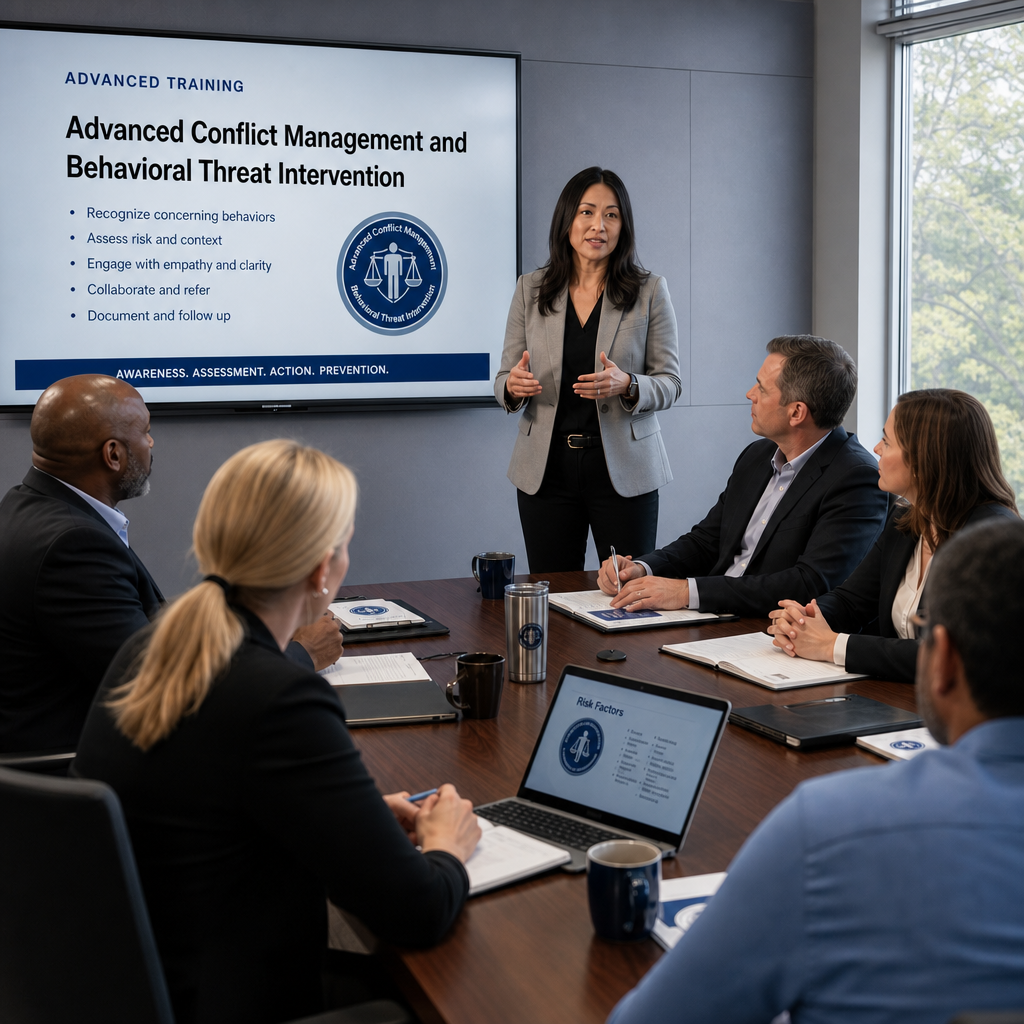
De‑Escalation Science & Crisis Response for Security Professionals

Course Overview
This comprehensive course provides security professionals with a modern, science-based understanding of de-escalation, behavioural crisis management, and tactical communication. Drawing from neuroscience, psychology, clinical crisis intervention, and private-sector security operations, the program equips learners with the skills required to safely and effectively manage high-emotion encounters across healthcare, retail, commercial, and public environments.
Learners explore how stress, fear, and cognitive overload influence human behaviour, and how security professionals can use communication, positioning, and emotional intelligence to stabilize situations before they escalate. The course integrates real-world operational principles with evidence-based behavioural science, preparing guards to act as calm, professional stabilizing forces during complex incidents.
Who This Course Is For
This course is designed for:
- Security guards working in healthcare, retail, commercial, residential, and public-facing environments
- Supervisors, team leads, and emerging leaders responsible for incident response
- Loss prevention and customer-facing security personnel
- New security professionals seeking foundational crisis-management skills
- Experienced guards looking to formalize and advance their de-escalation competencies
- Organizations seeking ISO-aligned, university-standard training for compliance and accreditation
The content is accessible to new learners yet deep enough for seasoned professionals who require advanced behavioural insight and operational refinement.
Learner Outcomes
Upon successful completion of this course, learners will be able to:
- Explain the behavioural science behind human stress responses, emotional escalation, and crisis behaviour
- Apply tactical communication strategies that reduce emotional intensity and promote voluntary compliance
- Use positioning, movement, and environmental control to enhance safety without escalating tension
- Recognize early warning signs of aggression and intervene proactively
- Manage high-risk encounters involving mental health crises, substance-induced agitation, emotional overload, and multi-party conflicts
- Make legally defensible, ethical decisions under pressure using structured risk-assessment models
- Produce clear, objective, ISO-compliant incident reports that document de-escalation efforts and operational decisions
- Demonstrate professional presence, emotional regulation, and leadership during complex behavioural incidents