Emergency Preparedness and Response
Course Overview
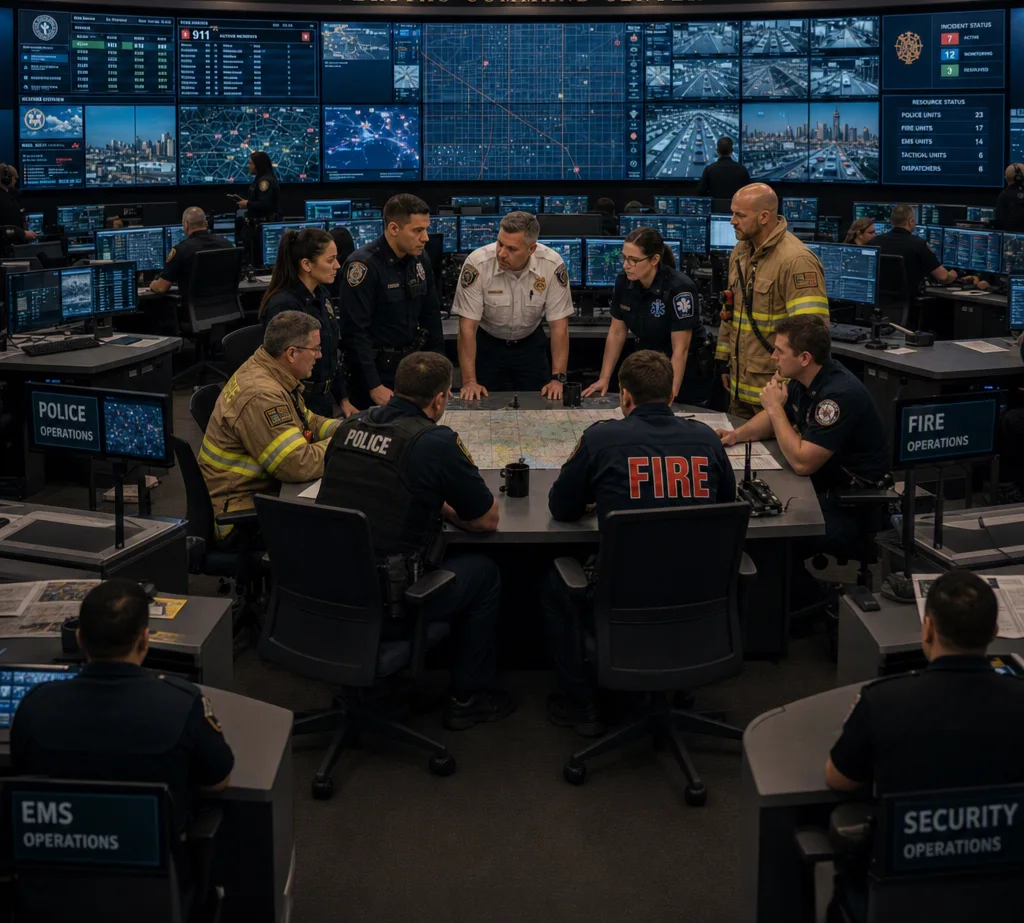
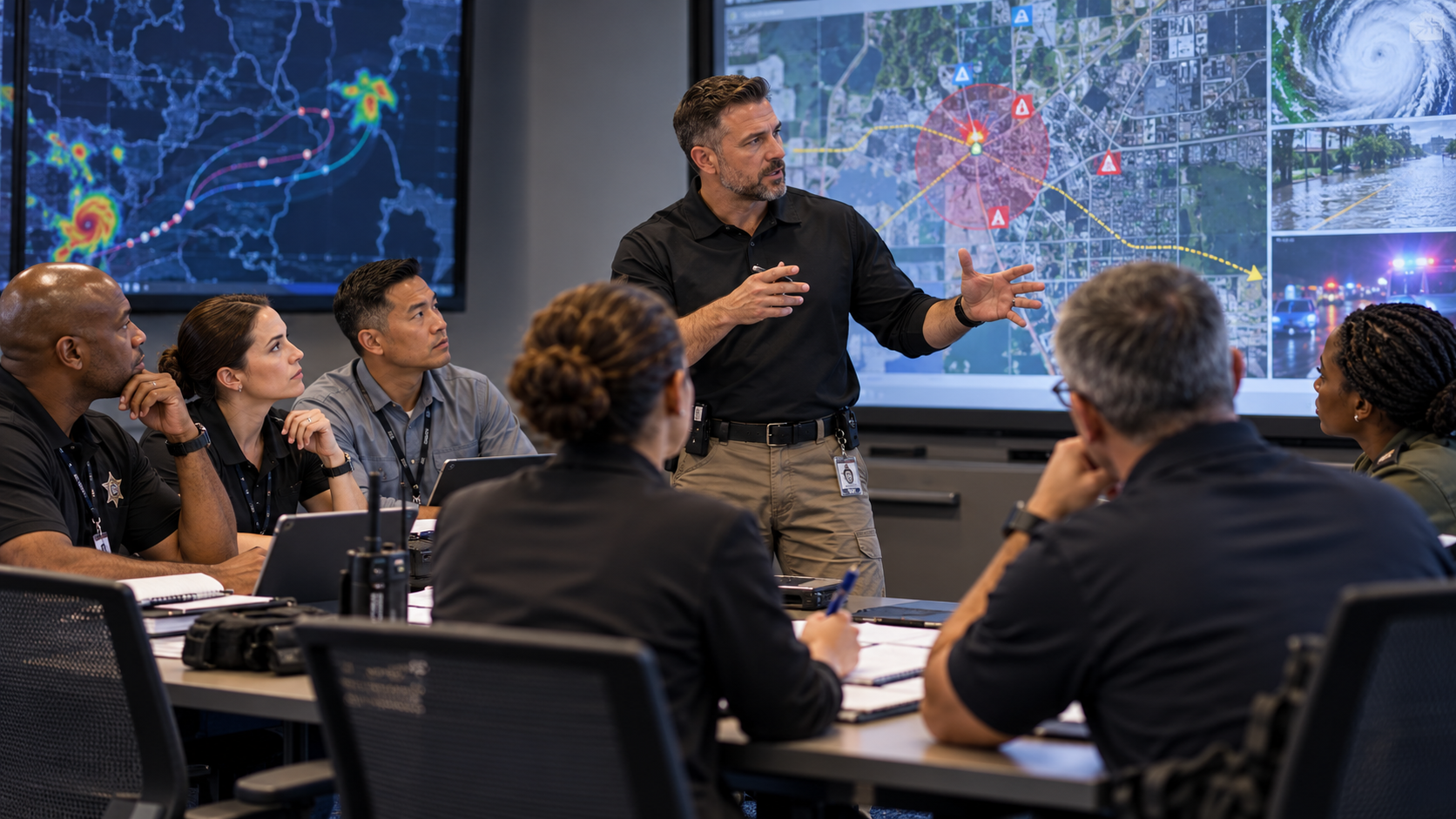
Emergency Preparedness and Response for Security Professionals is an advanced, scenario‑driven training program designed for modern security practitioners who operate in environments where emergencies unfold rapidly and unpredictably. This course moves far beyond traditional information‑heavy instruction. Instead, it immerses learners in realistic operational situations, guiding them through the lived experience of recognizing threats, stabilizing chaotic environments, communicating under pressure, coordinating with responders, leading people through uncertainty, and restoring normalcy after an incident.
Across eight extensive modules, learners explore the full arc of emergency management as it applies to frontline security operations. They begin with foundational readiness and progress through risk identification, emergency planning, operational response, communication, leadership, and post‑incident recovery. Each module is written as a continuous narrative, allowing learners to absorb concepts through real‑world context rather than fragmented theory. The course is fully self‑paced and requires no instructor, yet delivers the depth, realism, and applied learning normally found only in advanced professional programs.
By the end of the course, learners will not only understand emergency preparedness—they will be able to perform it. They will be equipped with the mindset, judgment, and operational capability required to act decisively when every second matters.
Who Is This For
This course is designed for security professionals who carry frontline responsibility for safety, emergency response, and incident stabilization within their organizations. It is ideal for individuals working in corporate security, healthcare security, retail loss prevention, critical infrastructure protection, public venue operations, transportation hubs, educational institutions, and any environment where emergencies can escalate quickly.
It is equally suited for emerging professionals seeking to build confidence and competence, as well as experienced practitioners who want to deepen their operational judgment, strengthen leadership presence, and refine their ability to manage complex, multi‑layered incidents. Organizations looking to elevate their emergency readiness standards will find this course appropriate for onboarding, professional development, and advanced training pathways.
Learners do not need prior emergency management certification. What they need is a commitment to professionalism, a willingness to engage deeply with realistic scenarios, and a desire to become the person others look to when uncertainty strikes.
Learners Outcome
Learners who complete this course emerge with a fully developed operational capability in emergency preparedness and response. They gain the ability to recognize early warning signs, interpret unfolding situations, and act with clarity even when information is incomplete. They learn how to stabilize chaotic environments, guide occupants with calm authority, and communicate in ways that reduce panic and create structure.
They develop a strong understanding of how emergencies evolve, how human behavior shifts under stress, and how leadership presence influences group dynamics. They learn to integrate emergency plans into real‑time action, coordinate seamlessly with internal teams and external responders, and make decisions that prioritize life safety and organizational resilience.
By the end of the program, learners are able to move through an emergency with confidence—from the first moment of recognition, through tactical response, through communication and coordination, through leadership under pressure, and finally through post‑incident recovery and continuous improvement. They leave the course not only prepared for emergencies, but transformed in how they think, act, and lead during them.