Situational Awareness and Response
Course Overview
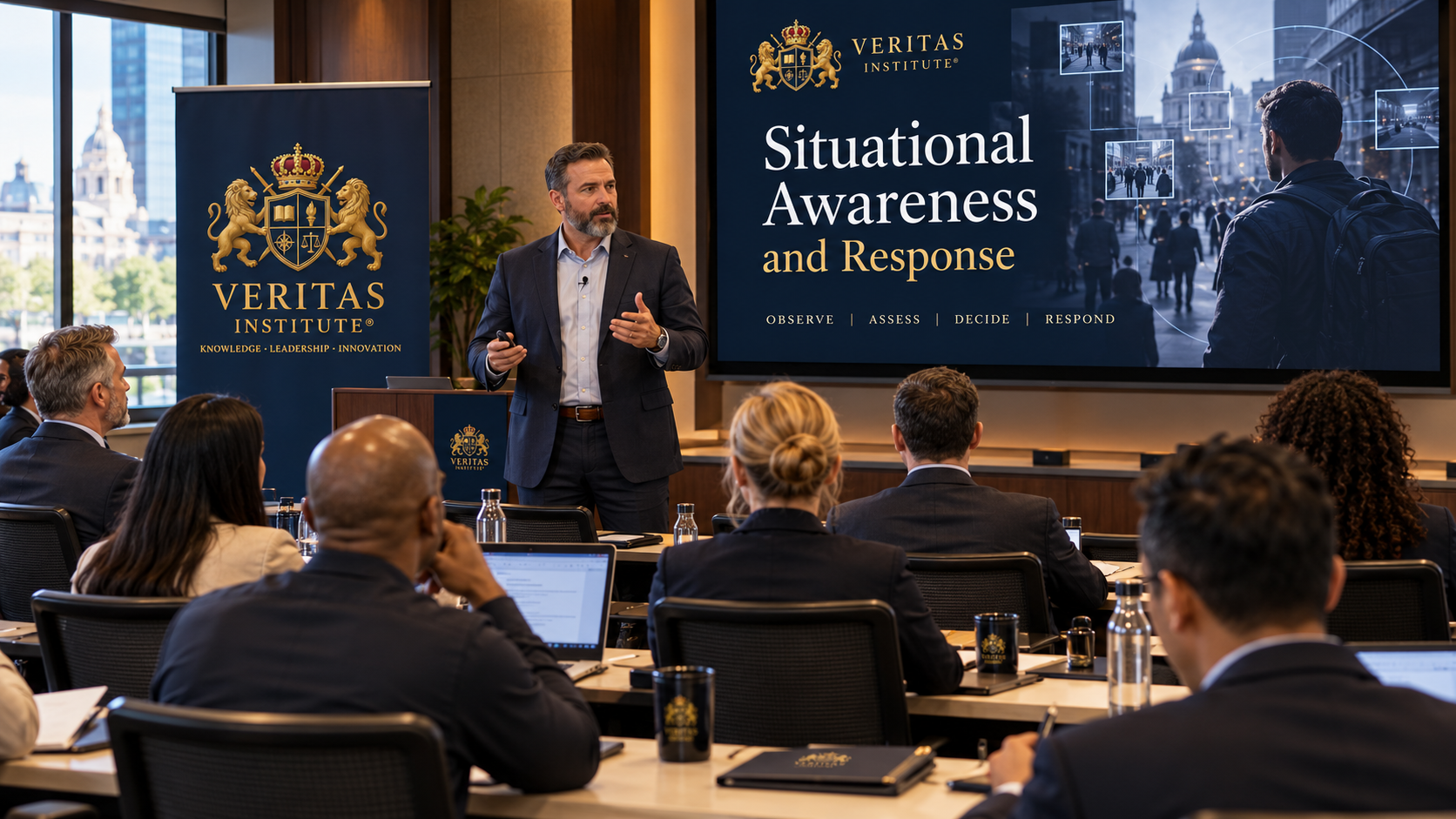
Situational awareness is more than noticing what’s around you — it’s understanding what it means. In a world where most incidents build quietly before becoming visible, the ability to read environments, interpret behavior, and respond with clarity is one of the most powerful personal and professional skills you can develop.
This board‑certified program takes learners far beyond surface‑level observation. Through psychology, human behavior, environmental scanning, and real‑world scenarios, you will learn to detect subtle shifts, recognize early warning signs, trust intuition, and make confident decisions under pressure.
By the end of this course, you won’t just see your environment — you will understand it. You will move through the world with calm readiness, stronger instincts, and the ability to influence events before they unfold.
Who Is This For
This course is designed for anyone who must recognize, interpret, or respond to emerging situations — from everyday citizens to frontline professionals.
It is ideal for:
-
Security officers, corporate security teams, and contract professionals
-
Airline, retail, hospitality, and customer‑facing employees
-
Campus, facility, and operations personnel
-
Community members seeking practical personal safety skills
-
Anyone responsible for maintaining awareness in dynamic environments
The content is accessible to the public yet deep enough to meet professional security standards, making it equally valuable for beginners and seasoned practitioners.
Learners Outcome
Graduates of this program walk away with a complete, practical foundation in situational awareness — the mindset, habits, and instincts that support safety, leadership, and professional readiness.
You will be able to:
-
Read environments quickly and accurately
-
Identify behavioral cues, anomalies, and pre‑incident indicators
-
Understand baselines and detect subtle shifts in energy
-
Trust intuition as a legitimate safety tool
-
Reduce the freeze response through mental preparedness
-
Make clear, confident decisions under pressure
-
Apply structured models like the OODA Loop in real‑world situations
-
Respond effectively to medical, emotional, or security‑related incidents
-
Demonstrate professional‑level awareness in frontline roles
This course builds the foundation for safer communities, stronger teams, and more effective security operations.